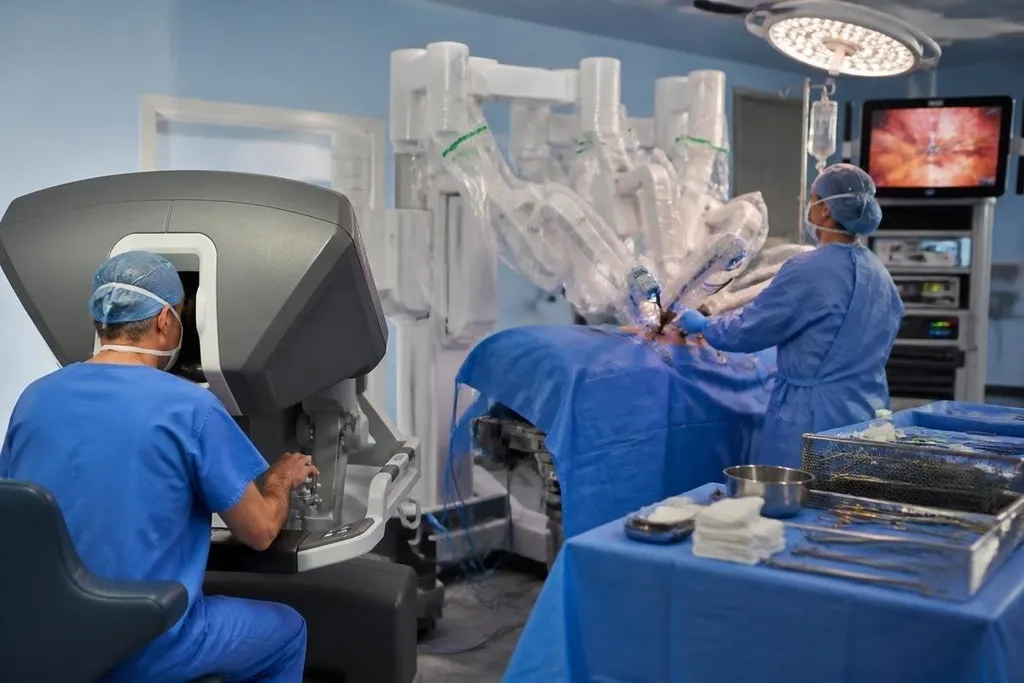
Surgical robots can create several businesses around one operation: the robot itself, the instruments used during surgery, and the service needed to keep the system running. That matters to a company choosing between building hardware, selling software, or supplying hospitals.
- Hardware sales: high-cost systems installed in operating rooms
- Procedure revenue: instruments and accessories used again and again
- Service work: training, maintenance, software, and workflow support
How the money is made
A typical surgical robot has a surgeon console, a patient-side cart, a camera system, and robotic arms that hold instruments. The surgeon controls the arms rather than handing control to an unsupervised machine, so the business case depends on better control, clearer views, and useful instrument movement.
The robot sale brings in the largest single payment, but it may not be the only source of income. Hospitals also need sterile instruments, replacement parts, software updates, training, and technical service.
That gives makers a continuing revenue stream after installation.
The instrument business can be especially important. A hospital may buy the main system once, then order different tools for each type of procedure. A company that makes a useful stapler, gripper, camera, or energy instrument can earn money from every case where that tool is used.
Service creates another opening. A robot that sits idle because of a software fault or a damaged arm costs the hospital operating-room time. Companies can sell inspection, repair, remote diagnostics, training, and integration with scheduling or hospital records.
Where smaller companies can enter
Building a complete surgical robot requires capital, regulatory work, clinical testing, and access to hospitals. Smaller firms can start with one part of that chain instead.
Instrument makers can focus on a narrow procedure. Vision companies can work on 3D imaging, tissue tracking, or tools that help a surgeon see the operating area. Software firms can build systems that record instrument movement, manage case data, or train staff in a simulator.
Training is another practical market. A hospital needs surgeons, nurses, and technicians who know how to set up the system, load instruments, respond to alarms, and clean the equipment. A training company can sell simulators and courses without making the robot itself.
That training market sits beside the companies building surgical systems and the tools that support them. For a buyer comparing suppliers, Robot 24 can add named machines, company details, and reported hospital use to claims about price and training. Those details matter when a component maker depends on approval from the robot company.
The main risk is that a useful component may still depend on the robot maker's approval. A camera or instrument company needs access to the system, permission to sell into hospitals, and a path through medical-device rules. A good product can stall if those links are missing.
What hospitals will pay for
Hospitals don't buy a robot because it has many moving parts. They pay when it fits a real procedure, works with existing staff, and earns back its cost through more cases, shorter room time, or a service that the hospital can bill.
That makes evidence more useful than a long feature list. A supplier needs to show which procedures the system supports, how long setup takes, what instruments cost per case, and how much training staff need before regular use.
The buyer also needs a clear answer on safety. Surgical robots work near tissue, blood vessels, and other tools. A company must explain how the system limits arm movement, stops when the surgeon releases control, records faults, and handles a power or network failure.
Hospitals may also ask who owns the data. Procedure video, instrument movement, and training records can help improve a system, but they can also create privacy and legal duties. A business model that depends on this data needs clear permission rules and secure storage.
A practical screen for a new business
Use these checks before putting money or staff time into a surgical robotics company:
- Name the procedure: state the operation and the step the product improves.
- Price each case: include instruments, sterile supplies, service, and training.
- Find the buyer: identify the surgeon, operating-room manager, procurement team, or hospital group that signs off.
- Check system access: confirm the product can work with the robot and records the hospital already uses.
- Map the approval path: list the clinical tests and medical-device reviews still needed.
- Show the proof: record case time, setup time, faults, and staff training hours from real use.
I'd back companies that solve one costly operating-room problem and can show the result without asking hospitals to replace their whole system.
The next business opportunity may sit beside the robot rather than inside it: a tool, training system, service contract, or data product that makes one approved procedure easier to run.